Case study · № 002 · 2024
FERRARO · configure it, then order exactly that
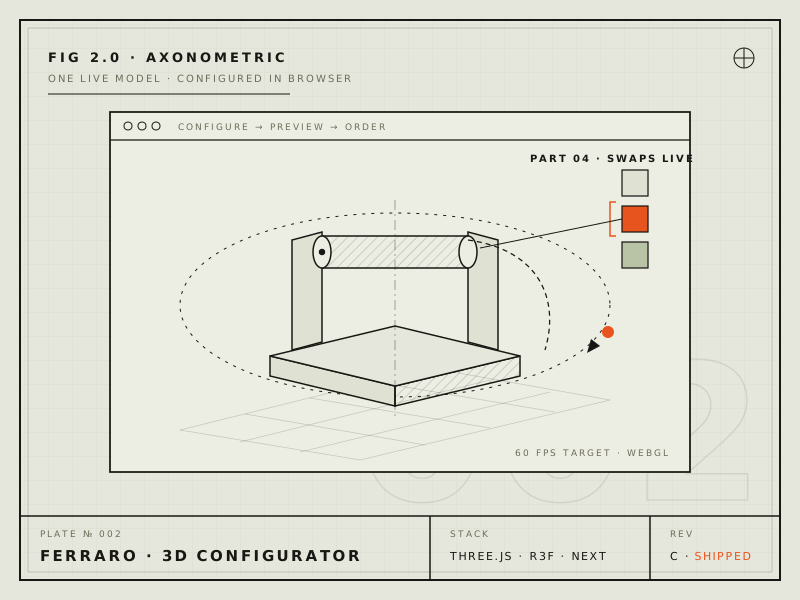
A real-time 3D configurator for an industrial fabric machine. Buyers rotate the machine, swap its configurable parts in the browser, and the configuration compiles into the exact build they order.
The problem
An industrial fabric machine is a large capital purchase with a lot of configurable parts. Sell it from a spec sheet or a sales call and the buyer never actually sees what they are ordering, so a wrong choice in the spec surfaces late, when it is expensive to fix.
The brief was to put the machine in the browser: let a buyer rotate it, swap the configurable parts, watch the result update in real time, and turn that exact configuration into the order.
The build
- Real-time part swapping. Each configurable part is its own swappable geometry and material in one scene, so choosing an option changes the machine on screen immediately instead of loading a new render.
- A model pipeline built for the web. The manufacturer's heavy source models were compressed and optimized (GLTF with Draco, unused geometry disposed) so the machine loads and holds a smooth frame rate on a normal laptop, not just a workstation.
- Configuration as the source of truth. The 3D state is backed by a structured configuration, so what the buyer sees and what the order says are the same object, with no screenshot-to-spec step in between to get wrong.
- Guided interaction. Orbit, zoom, and camera moves walk a non-technical buyer to each configurable part, so industrial 3D reads like a product page rather than CAD software.
Decisions that mattered
Swap parts, do not pre-render them. The early instinct was to pre-render option combinations. That does not survive past a handful of parts. Making each part a live swap in a single scene is what let the configurator cover the real option space.
Fix the model before touching the UI. A configurator that stutters is a configurator nobody trusts. Getting the asset pipeline right first, compression and memory and load time, made every later interaction decision cheaper.
The configuration is the contract. Binding the 3D state to a structured spec means the order can never quietly disagree with the picture. For a capital purchase, that guarantee is the entire point of building it.
Outcome
Shipped for the manufacturer and live: buyers configure the machine in the browser and order the exact build they specced. It is the project where I learned to treat 3D on the web as a real product surface with a real pipeline behind it, not a novelty.