Case study · № 005 · 2022–2023
FLORAGENIC · a plant, and what's wrong with it, from one photo
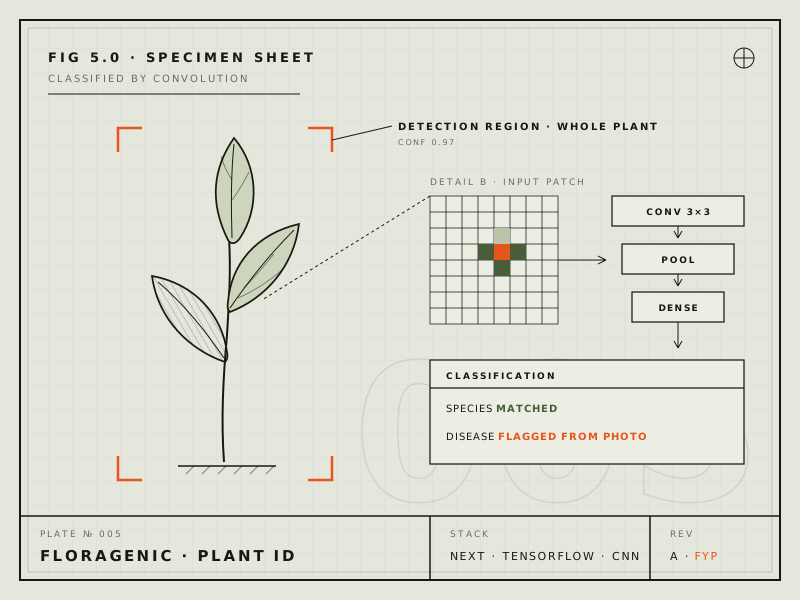
A plant marketplace connecting customers, nurseries, and gardeners, with a CNN that identifies a plant and flags likely disease from a single photo. Final-year project.
The problem
Buying plants online is mostly blind. You cannot tell a healthy plant from a struggling one in a listing photo, and once you own one, working out why it is dying means guessing or trawling forums.
FloraGenic connected the people in that chain, customers, nurseries, and gardeners, and used a model to answer the two questions a photo can actually answer: what is this plant, and does it look diseased.
The build
- Identification and disease detection by transfer learning. I fine-tuned a pretrained CNN on plant and disease imagery so the app can name a plant and flag likely disease from one uploaded photo. This was my part of the project.
- The model lives in the product, not in a notebook. Identification and detection run inside the normal flow, so a customer or gardener gets an answer at the point they need it.
- A three-sided marketplace, built with the team. Customers, nurseries, and gardeners as distinct roles, so plant commerce and gardener services live in one platform.
Decisions that mattered
Transfer learning over training from scratch. With a final-year timeline and a limited dataset, fine-tuning a proven architecture was the honest engineering call: stronger results, less overfitting risk, and effort spent on the product instead of chasing a from-scratch model.
Put the model in the path. A classifier that only exists in a training script proves nothing. Wiring it into the actual upload flow was the difference between a demo and a feature.
Treat the gardener as a real role. Plants need ongoing care, so a service role alongside the store made the platform match how people actually keep a plant alive, not just how they buy one.
Outcome
Delivered as a team final-year project and deployed, with the identification and disease-detection model working inside the platform. It was my first time carrying an ML feature the whole way, from a dataset to something a user points a camera at, which is the exact shape of the AI work I do now.